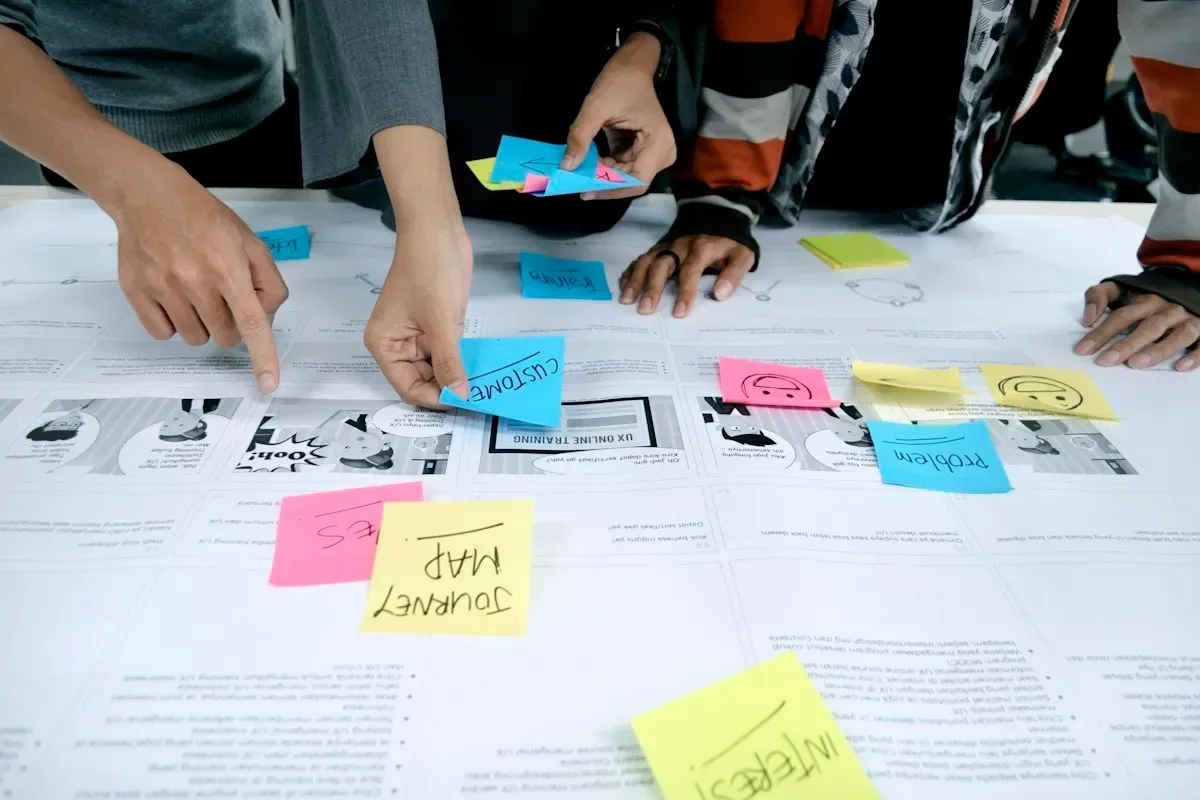
Running a 90-Minute Causal Loop Mapping Workshop
A 90-minute causal loop mapping workshop
A causal loop mapping workshop is the right room when a metric keeps returning after fixes. Ninety minutes can produce a named outcome, three to six variables, two loops, one delay, and one test the group can run. It is a poor room for a first brainstorm with no history, and a poor room for a full stock-and-flow model.
Use this agenda when the same operational or policy result has already come back at least once. If there is no recurrence, a mind map is the better first artifact. That comparison is in causal loop diagram vs mind map.
Outcome and recurrence (0-15 min)
Name the metric and when it returned before.
Variable harvest (15-40 min)
Cluster neutral factors. Rename blame labels.
Links and loops (40-65 min)
Draw contested links, mark polarity, close two loops.
One leverage test (65-80 min)
Pick a link the group can influence within six weeks.
Capture (80-90 min)
Photograph the map and book the follow-up before people leave.
Before the room
Spend about fifteen minutes, not a slide deck. Send three things: the outcome metric in one sentence, the last three interventions and what happened to the metric after each, and the ground rules. The rules that matter are short. Variable names stay neutral. Nobody is the variable. Phones stay down while the group sketches. One person records.
Invite the people who can change a link, not an audience. Four to seven people is a workable room. A larger group can watch a readout later. If trust is low, an external facilitator helps because the owner does not have to both defend the metric and keep the clock. If ground rules already hold, an internal owner is enough.
Book the follow-up at the same time as the workshop. A map with no date dies in the photo roll.
Minutes 0 to 15: outcome and recurrence
Write the outcome at the top before discussion starts. Ask when the group last saw the same result, who owned the response, and which number moved. Capture dates in the margin. If people name three different outcomes, stop and pick one. A workshop that maps “customer issues” and “staff burnout” and “the strategy” in the same ninety minutes will close none of them.
The recurrence question is the filter. If nobody can point to an earlier episode, you are collecting topics, not loops. End early and switch artifacts. The rest of the agenda assumes the outcome has happened before.
Minutes 15 to 40: variable harvest
Silent writing first, two or three minutes, nouns only. Then cluster duplicates in front of the room. Rename blame as you cluster. “Bad communication” becomes a factor such as shared priority clarity or status lag. “They do not care” becomes a factor you could observe, such as response time or decision rights.
Aim for three to six variables that sit on paths into the outcome. Park the rest on a side list. The side list is not a failure. It is how you keep the clock. If two clusters represent the same mechanism at different altitudes, keep the one the group can influence inside six weeks and note the other as context.
Tradeoff: a longer harvest feels thorough and steals the loop time. If you are still clustering at minute 40, freeze the list and move. You can add a variable later if a link has no place to land.
Minutes 40 to 65: links, polarity, and loops
Draw contested links first. Uncontested links are faster, and they are also how a map becomes a poster nobody tested. For each contested link, one person states the sentence: if this rises, that rises or falls. Mark the sign. If the room splits, draw both as alternates and star the one you will test. Do not leave the arrow blank to stay polite.
Close two loops if you can: one reinforcing, one balancing. Read each loop aloud as a story that returns to the outcome. Name them in plain language, R1 and B1. Mark one delay, even if the duration is a range. Skip the rest of the possible arrows. The elicitation pattern in symptom to structure is the longer version of this step when ninety minutes is not enough to find the recurrence story.
Stop this block when you have two named loops or when the timer hits 65, whichever comes first. More loops in the last five minutes are usually decoration.
Minutes 65 to 80: one test, not a program
Pick a link the people in the room can move within six weeks. Assign one owner and one leading indicator on that path. The indicator should move before the outcome metric does, especially if you marked a delay.
Say no to the second and third ideas out loud, and write them on the parking list. A workshop that leaves with five actions has not chosen. The test can be small: change one handoff, protect two hours a week, publish one number that was previously private. It should be specific enough that the follow-up meeting can say whether the leading indicator moved in the expected direction.
If every candidate link sits outside the group’s authority, the honest output is an escalation, not a fake owner. Name who can move the link and what you will ask them.
Minutes 80 to 90: capture before the room clears
Photograph the map, including the parking list and the delay note. Transcribe the variable names, the two loop names, the polarity you argued about, the test, the owner, and the follow-up date. Schedule that follow-up before people stand up. Ten minutes of capture beats a beautiful photo nobody can decode on Monday.
If you will move the map into software, do it from this transcription, not from memory a week later. Causal loop diagram software and the systems thinking tool checklist are the buying and setup notes. Holist-IQ fits teams that need the sticky-note map to stay editable: plain-language variables, named loops, and assumptions you can revise after the test.
A dry run you can time
A made-up example: practice once with a fictional recurrence so the clock is familiar. Outcome: the same incident class returns within a month of a “fix.” Variables you freeze at minute 40: open incidents, hours on urgent fixes, hours on prevention, release pressure. Contested link: urgent hours up, prevention hours down. Reinforcing story: incidents pull people onto urgent work, prevention slips, similar incidents return. Balancing story: a visible backlog triggers overtime, throughput rises, the backlog falls until the overtime ends. Delay: prevention changes show up after the weekly incident count. Test inside six weeks: protect a fixed prevention block and watch whether urgent hours stop consuming it. That is a timing rehearsal, not a result from a real program.
When to stop or skip the workshop
Stop if the outcome is still a slogan at minute 15. Stop if you cannot name a prior episode. Skip the ninety-minute loop workshop when the decision is a one-off purchase with no feedback history, or when the group needs equations and stocks before it needs a shared story. Also stop adding variables after six if the extra nouns do not change R1 or B1.
Remote rooms work with a shared canvas, one speaker at a time, and a visible timer. Ask people to type the link sentence in the chat before you draw it, so polarity is not lost in the recording.
Facilitation failures that waste the ninety minutes
Too many variables is the common one. Debating polarity before anyone has said the sentence is the second. Skipping the delay mark makes the six-week test look naive or, worse, makes the group promise a lagging metric. Leaving without an owner makes the photo the deliverable. A facilitator who fills silence with their own arrows will get a map of the facilitator.
Do we need an external facilitator?
Use one when trust is low or when the metric owner cannot keep the clock. An internal owner is enough when the ground rules hold and someone else is writing.
What if the group wants a half-day session?
Take the extra time on recurrence evidence and on reading links aloud. Do not spend it on more variables. The output is still two named loops and one test.
Can this run remotely?
Yes, with a shared canvas, a visible timer, and one speaker at a time. Type each link as a sentence before you draw the arrow.
What to do next
Run the dry run with your own team, then hold the real ninety minutes on one recurring metric. Tighten how people read the result with how to read a causal loop diagram. After the map exists, keep it in a tool you can edit, using the systems thinking tool checklist as the buying filter.
Written by
Holist-IQ Team
Helping teams see the whole picture through systems thinking and feedback loop mapping.
Related Articles
You might also be interested in these articles