
Latest articles
Browse our blog for guides, updates, and stories.

Leverage Points in Systems Thinking: Where Small Shifts Change Outcomes
Leverage points in systems thinking show where to intervene before effort disappears into symptoms. Map loops, delays, and rules that matter.
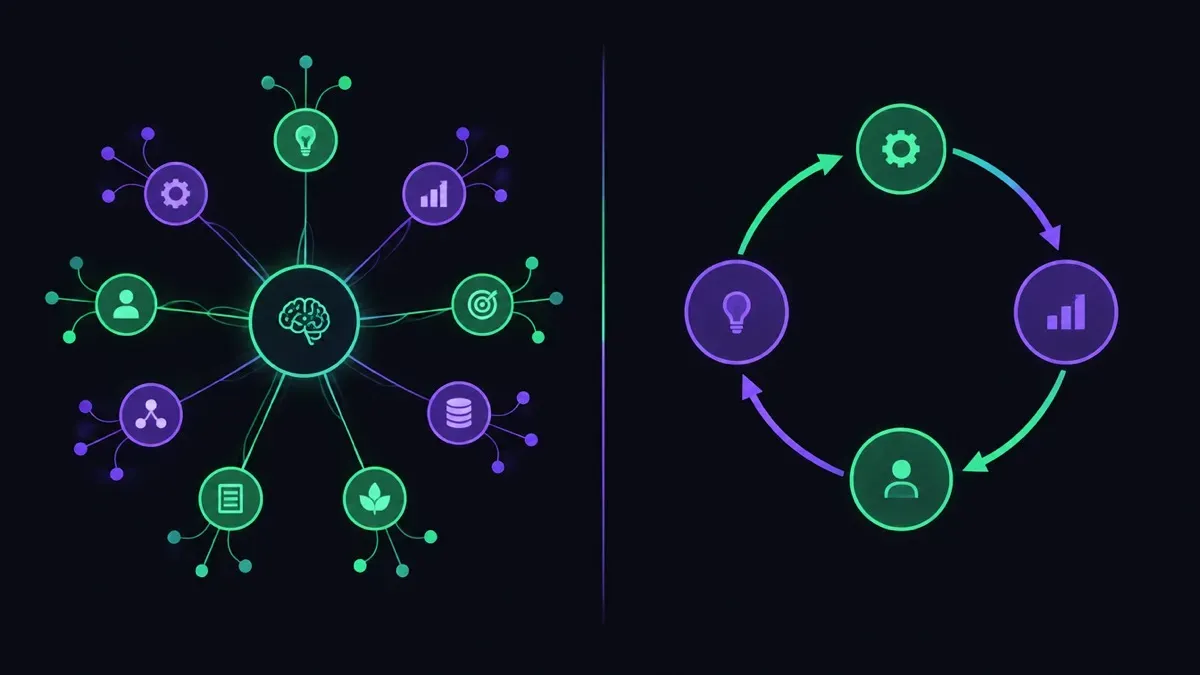
Causal Loop Diagram vs Mind Map: Which Mapping Tool Fits the Decision?
Causal loop diagram vs mind map: compare feedback, process flow, and brainstorming uses so you pick the right map for the job.

Second-Order Effects: Why Good Decisions Still Backfire
Second order effects explain why sensible first-round decisions surprise teams later. Learn to spot delayed feedback and unintended consequences.

Reinforcing vs Balancing Loops: Tell Them Apart in One Sitting
Learn reinforcing and balancing feedback loops with simple tests, worked examples, and a quick workflow so you can read system behavior with confidence.

What Is a Causal Loop Diagram? A Decision-Maker's Primer
A causal loop diagram maps variables, link polarity, and feedback. How to read reinforcing and balancing loops before you choose a fix.

Economic Systems Modeling: Mapping Policies, Interest Rates, and Market Feedback Loops
Learn how economic systems modeling with Holist‑IQ helps economists map policy effects, interest rates, and feedback loops shaping real economic outcomes.

Systems Thinking for Public Policy: Designing Better Political Decisions in Complex Systems
Learn how systems thinking helps policymakers understand complex policy effects, anticipate feedback loops, and design smarter public decisions.

Causal Loop Diagram Software: A Buyer's Guide for Teams
This causal loop diagram software guide helps teams evaluate tools for feedback loop mapping, collaboration, and what-if decision-making.

Holist-IQ Tutorial: Build Your First Feedback Loop Map in 20 Minutes
Follow this Holist-IQ tutorial to build a feedback loop map, identify leverage points, and turn complexity into a clear action plan.

Holist-IQ: Map Feedback Loops and Turn Complexity Into Clarity
Holist-IQ helps teams map feedback loops, align stakeholders, and make clearer decisions when problems are driven by complex systems.